As the "precision shaper of terrain," graders play a pivotal role in earthwork projects, leveraging their efficient leveling capabilities for road and site construction. This article delves into the practical applications of graders across scenarios and integrates the latest safety protocols, offering the industry a professional and actionable reference.
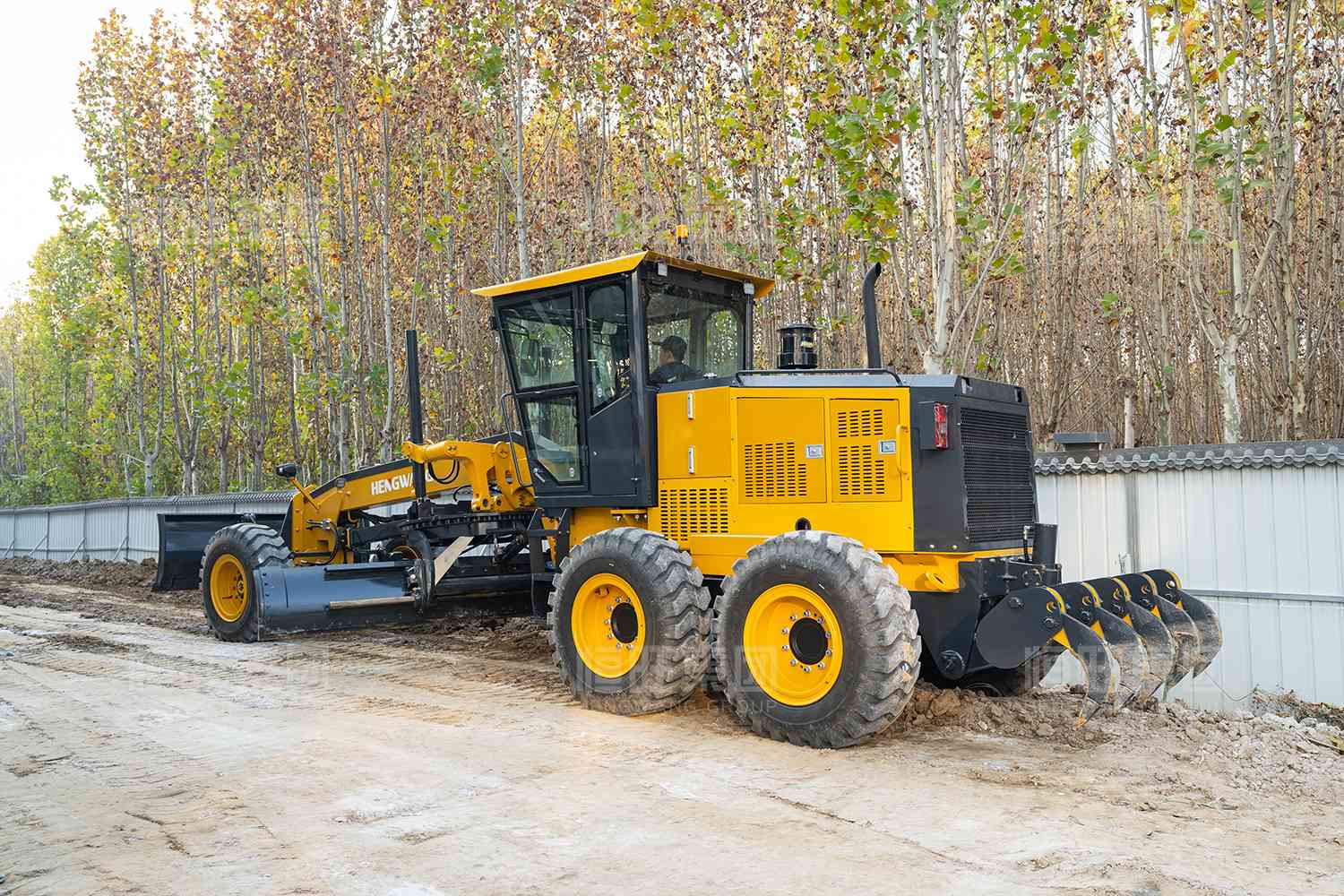
Subgrade Leveling: For highways and railways, the blade controls ±2mm-level elevation differences to ensure uniform subbase compaction, reducing post-construction settlement risks.
Pavement Finishing: Eliminates local height deviations before asphalt/concrete paving; with laser leveling systems, achieves millimeter-level flatness.
Slope Trimming: Equipped with tilting mechanisms, quickly forms embankment and cutting slopes to enhance road stability.
Industrial Zones: In logistics parks and factories, efficiently handles large-area backfill to create hardened ground bases meeting design elevations.
Building Foundations: After excavators complete rough grading, fine-levels foundation pits for piling and basement construction.
Airport Runways: Meets strict civil aviation standards (≤3mm deviation per 3m) via high-precision positioning, ensuring aircraft safety.
High-Standard Farmland: Eliminates field elevation differences for mechanized operations, integrating drainage slopes to boost irrigation efficiency by 30%.
Irrigation Channels: Excavates trapezoidal/rectangular channels along design axes, controlling bottom slope errors within ±0.1% to reduce water resistance.
Desertification Control: Levels sand dunes and gravel lands in reclamation projects, creating suitable micro-terrains for vegetation.
Open-Pit Mines: Levels mine roads to reduce equipment wear and compacts waste dumps to mitigate landslide risks.
Wind/Solar Infrastructure: Quickly constructs equipment platforms on complex terrains (mountains, gobi), ensuring foundation precision for turbines and solar supports.
Mechanical Inspection: Verify tire pressure (±0.2bar tolerance), blade hydraulic system tightness, and brake sensitivity; never operate faulty equipment.
Site Survey: Mark underground utilities (via metal detectors), set 5m exclusion zones, and prohibit unauthorized access.
Parameter Calibration: Input elevation/slope data per blueprints; calibrate laser receivers/BeiDou positioning for precise automation.
Prohibit sharp turns with the blade not completely off the ground (≤30cm clearance) to avoid unilateral tire overload.
Prohibit overloading (≤10% of rated capacity); never use the blade to break frozen soil or rocks.
Prohibit idling on slopes >15°; switch to low gear and keep the blade grounded for anti-slip.
Prohibit continuous operation >4h without rest; record temperatures (hydraulic oil ≤85℃, engine water ≤95℃).
Prohibit modifying safety devices (backup cameras, radar); ensure alarms and beacons function.
Signalperson Requirement: Mandate professional signalers in complex scenarios, using standardized gestures (GB 5082-2019) over vague radio communication.
Night Operations: Activate all lighting (headlights, work lights, markers); maintain ≥30lux illumination with reflective markers in blind spots.
Extreme Weather: Park on flat hard ground during storms (≥Grade 6 wind); lower the blade, lock it, and disconnect the battery.
Routine Maintenance: Clean blade debris after each shift; check drive shaft bolt torque (±5% of manufacturer standards) weekly; replace hydraulic oil and clean filters every 500h.
Emergency Procedures: For burst hydraulic lines, shut down immediately, seal leaks with plugs, and never repair under pressure. In tip-over risks, evacuate to a 45° rear safety zone.
Modern equipment integrates smart safety technologies:
360° Panoramic Vision: Real-time stitching of work areas via 4 cameras, eliminating blind spots.
Collision Avoidance Radar: Detects moving objects (personnel/vehicles) within 2m, triggering alarms and limiting blade movement.
Electronic Fence: Pre-sets operation boundaries, automatically slowing/stopping equipment to prevent overruns.
A grader’s value lies not only in efficient terrain leveling but also in end-to-end construction safety control. From traditional operation to intelligent collaboration, practitioners must remember: Compliant operation is the premise of efficiency, and equipment maintenance is the foundation of safety. By matching application scenarios precisely and adhering to standardized safety protocols, graders can truly become "reliable terrain artists" in earthwork projects.